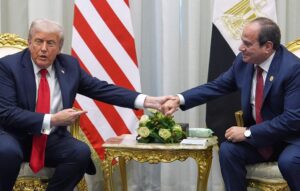
In the Egyptian city of Sharm El-Sheikh, the world witnessed one of the most significant turning points in the Palestinian–Israeli conflict with the signing of the Gaza Agreement 2025, brokered by Egypt with strong regional and international support.
The agreement came after months of intense military escalation in Gaza, reviving hope for a comprehensive ceasefire and a genuine reconstruction effort for the war-torn strip.
The event was not merely diplomatic. It revealed the unprecedented strategic role of the Egyptian General Intelligence Service (GIS), which led the behind-the-scenes negotiations with a balanced blend of political acumen and security expertise.

Background and Key Provisions
The Sharm El-Sheikh Gaza Agreement was not born overnight. It was the result of months of Egyptian intelligence and diplomatic efforts.
The deal included several key points that formed the foundation of the ceasefire:
A complete cessation of hostilities between Israel and Palestinian factions
A prisoner exchange based on a clear timetable under international supervision and Egyptian guarantees
Unrestricted entry of humanitarian aid and relief through the Rafah crossing and other access points
Launch of the reconstruction phase under financial and administrative monitoring led by Egypt in coordination with the UN
Formation of a permanent coordination chamber including Egypt, Qatar, and the United States to follow up on implementation and compliance
The agreement was hailed as a turning point — not just ending the war but establishing new mechanisms of engagement, thanks to the trust Cairo has built with all sides.

The Egyptian General Intelligence Service: The Hidden Player Behind Success
Egypt’s role was far beyond hosting the talks.
The General Intelligence Service managed the entire process from start to finish, demonstrating its trademark blend of firmness and flexibility.
1. Managing Secret Communications
The GIS coordinated direct yet covert channels between Hamas and Israel, ensuring the dialogue stayed open even during escalations. This laid the foundation for formal talks in Sharm El-Sheikh.
2. Drafting the Security Clauses
Egyptian intelligence was the mind behind the agreement’s security framework — ceasefire terms, monitoring mechanisms, and prisoner swaps — designed to preserve Palestinian dignity and prevent renewed escalation.
3. Supervising Implementation on the Ground
Egyptian officers directly oversaw ceasefire observance and aid delivery, positioning Egypt not merely as a mediator but as the guarantor of the deal’s success.
4. Restoring International and Regional Trust
GIS efforts reaffirmed Cairo’s reputation as the most balanced and credible actor in the region, trusted by major global powers to manage sensitive security and political files.
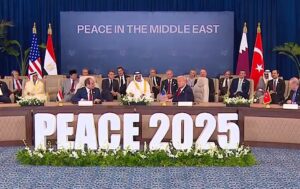
Egypt’s Regional Role: Restoring Balance
The agreement reshaped Egypt’s image as a pillar of peace — capable of bridging security and politics seamlessly.
Sharm El-Sheikh transformed from a tourist hub into a regional decision-making arena.
President Abdel Fattah El-Sisi affirmed during the summit that “Egypt will never allow the displacement of Palestinians nor abandon its responsibility toward Gaza,” a statement that reinforced Egypt’s moral and regional leadership.
Diplomatically: Egypt reaffirmed its status as the gateway to Middle East peace solutions.
In Security: The GIS’s supervisory role gave the deal credibility and reassured all sides.
Economically: The agreement opened the door for Egyptian companies to participate in Gaza’s reconstruction — a political, humanitarian, and economic gain altogether.

Impact on Gaza and the Region
The Sharm El-Sheikh Agreement is expected to bring positive outcomes over the medium and long term:
Sustainable calm allowing Gazans to gradually return to normal life
Launch of reconstruction projects with Arab and international funding under Egyptian supervision
Strengthened Egyptian position as a central mediator in regional crises
A revived political dialogue over final-status issues, with Egypt likely to host future negotiation rounds

Challenges Ahead
Despite early success, several challenges could threaten the agreement’s stability:
Possible violations of the ceasefire by any party
Disagreements over reconstruction funding mechanisms
Complex security dynamics inside Gaza involving multiple factions
The need for sustained international commitment to support and monitor Egypt’s efforts
Nevertheless, Egypt’s ongoing presence remains the key stabilizing force preventing a relapse into conflict.
Conclusion :
The Gaza 2025 Agreement in Sharm El-Sheikh is not merely a peace document.
It represents a new model of Egyptian security diplomacy — a synthesis of intelligence precision and political wisdom.
The Egyptian General Intelligence Service stands at the core of this achievement, reaffirming its role as Egypt’s strategic arm in managing regional crises.
Once again, Egypt proves that peace is not imposed by force — it is built through reason, patience, and determination.
From Sharm El-Sheikh, a new chapter of Egyptian–Palestinian peace begins, carrying a clear message:
“Egypt does not intervene to gain — it intervenes to mend and restore balance.”
