
Independent Decision-Making Begins at the Factory :
Nations do not secure their political and military independence merely by possessing weapons; they secure it by owning the capacity to produce them. Egypt recognized this early and began an ambitious journey toward defense manufacturing, technology transfer, and workforce development. Over the years, the country has evolved from being just an importer and user of weapons to a producer and technological partner, paving the way for a new phase of strategic autonomy.

EDEX… The Event That Redefined the Landscape :
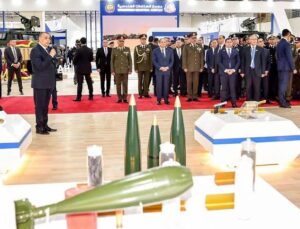
The Egypt International Exhibition for Defense and Military Industries, known as EDEX, has become a defining platform for this transformation. The exhibition has consistently attracted more than 100 countries from every continent and hundreds of specialized defense companies, all converging in Cairo not for protocol or courtesy, but because something substantial is taking place.
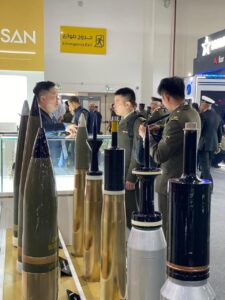
EDEX has given Egypt the opportunity to showcase competitive local products, sign joint manufacturing agreements, launch new production lines, and engage with leading global companies. It has become a central stage that reflects the scale of progress achieved in Egypt’s military-industrial environment.
A Leap Forward in Military Manufacturing :
One of the most notable developments has been Egypt’s announcement of locally manufacturing components of the Rafale combat aircraft for the first time. Fighter jets are among the most complex defense systems in the world, requiring:
- Advanced engineering capabilities
- Sophisticated industrial infrastructure
- Highly skilled personnel
- Precise testing and evaluation systems
This accomplishment demonstrates that Egypt has moved beyond experimentation to active participation in the heart of modern defense industries, a clear indicator of technological and industrial maturity.

Egyptian Products Joining the Global Arena :
Egypt’s participation in recent editions of EDEX included more than 57 fully Egyptian-made defense products, such as:
- Armored vehicles
- Air defense systems
- Radar technologies
- Military communication solutions
- Weapon system upgrades
This diversity signals the presence of a complete industrial ecosystem capable of continuous development, not just production.
The Egyptian UAV “Jabbar”… Entering the Age of Smart Warfare
Amid this technological momentum, the Egyptian unmanned aerial vehicle “Jabbar” stood out as one of the most significant milestones in Egypt’s defense evolution. Jabbar is not merely a drone, but an integrated platform that reflects a profound shift from traditional weaponry to intelligent warfare systems.

Jabbar showcases Egypt’s ability to:
- Integrate engineering, software, and communications into a single system
- Conduct high-precision surveillance and reconnaissance
- Adapt and upgrade payloads based on mission requirements
- Produce UAVs locally suited for regional military environments
Its emergence comes at a time when drones have become a central pillar of modern conflict. Few nations possess the capability to manufacture military drones at home, and Egypt’s entry into this field confirms its mastery of future-oriented technologies and operational doctrines.
The presence of systems like Jabbar sends a decisive message: Egypt is not only fielding a strong army, but building and shaping its weaponry with its own technological signature.
Diversified Sources of Armament… A Calculated Strategy :
Strengthening domestic production has been paired with a deliberate strategy of diversifying sources of weaponry. Egypt now collaborates militarily and technologically with countries such as France, China, India, South Korea, and the United Arab Emirates. This approach prevents dependency on a single supplier, expands strategic options, and opens channels for industrial partnerships—affirming that Egypt’s military decisions are now fully sovereign.
Economic Returns Beyond Expectations
Defense industries are not merely about equipping armies; they drive economic growth. Factories that manufacture weapons also create supporting industries, research centers, testing laboratories, and specialized training facilities.
This sector has become an essential economic contributor and part of Egypt’s broader transition towards an economy based on production, added value, and technological innovation rather than consumption.
A New Global Perception of Egypt :
For decades, Egypt was recognized for its regional political influence but lacked a distinctive defense industrial footprint. Today, this perception has changed. The world now views Egypt as a nation that manufactures, develops, and earns respect in a highly sensitive global market. This evolution has positioned Cairo as a destination for countries seeking real partnerships, not ceremonial alliances.
Young Egyptians and the Future
The defense sector is no longer confined to soldiers alone. It now encompasses engineering, artificial intelligence, cybersecurity, programming, and electronics. Egyptian youth must understand that their country is opening doors to a sector full of opportunities—one that shapes the future of warfare, technology, and national development.
Conclusion
Egypt’s journey in defense manufacturing is not merely a modernization of equipment; it is the rebuilding of national power and strategic autonomy. Egyptian defense industries are now a tangible reality, and EDEX stands as their clearest testament.
Egypt is not just declaring its presence; it is reinforcing it—entering a new era as a nation capable of producing, innovating, and defending its interests with tools it owns and systems it develops.
With this momentum, the future promises even more achievements for a defense industry that grows each year, reflecting the resolve of a state that knows its path and moves confidently toward it.
